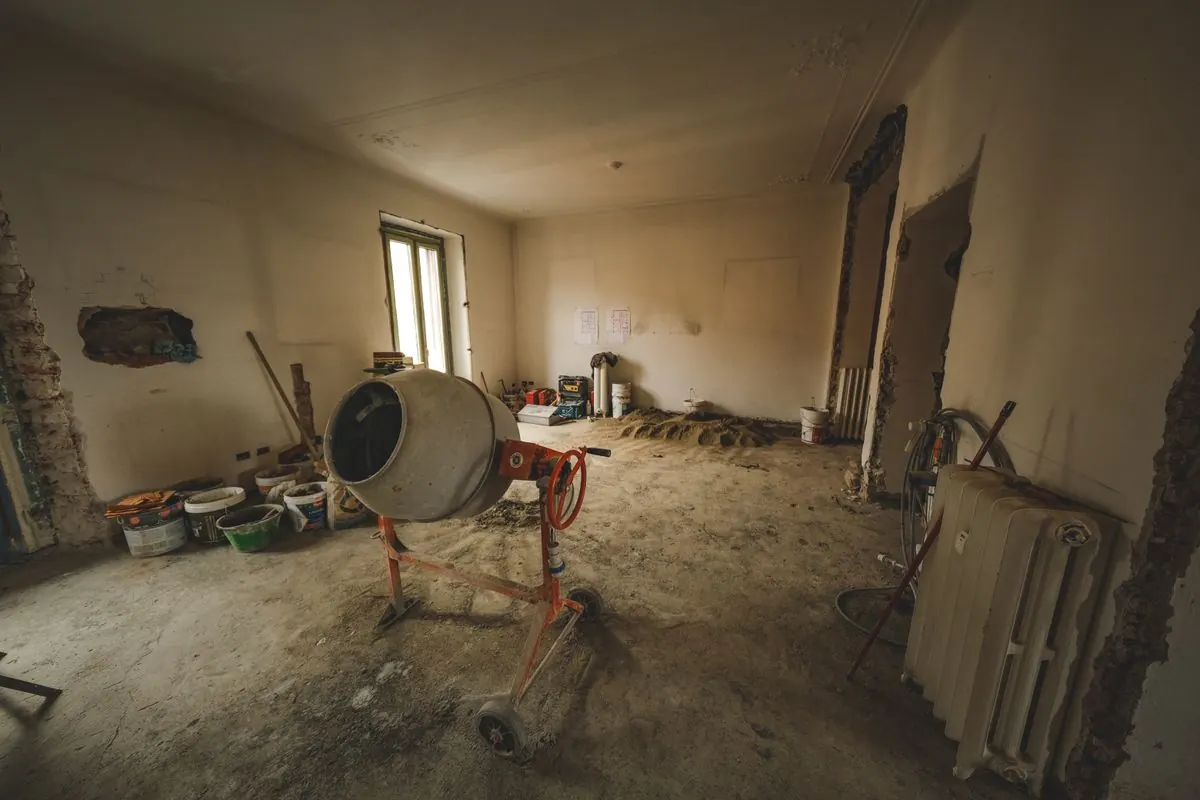
Dumpster rental for a bathroom remodel in Oak Forest should start with tile, mortar, fixtures and removal scope, not the room's small footprint. A compact room can still produce dense debris.
Concrete and dirt require DW's designated 16-yard container. Do not assume tile, mortar, a tub or other fixtures can join any load without review. Asphalt roofing and shingles, liquids, paint cans, hazardous waste and whole used or scrap tires are excluded. Suspected hazardous old building materials need professional assessment before disposal planning proceeds.
The material description, equipment and requested dates need DW confirmation. Request a bathroom-project quote with the identified materials and ask DW to confirm the suitable equipment and loading terms.
Find the answer you need
Count the layers, not just the fixtures
A vanity replacement differs from removing a tiled shower, floor and wall finishes. Describe whether the project stops at visible surfaces or includes underlying material. If the contractor has not established that scope, note the uncertainty rather than giving an apparently precise debris estimate.
Use a bathroom-specific scope sheet:
| Part of the room | What to identify | Why the rental discussion changes |
|---|---|---|
| Vanity and storage | What will be retained and what is discarded | Bulky cabinet volume may be smaller than the full room suggests |
| Floor | Covering, substrate and approximate removal area | Dense layers can matter more than visible pile size |
| Shower or bath surround | Identified finish and backing included in the work | The actual mixture needs review |
| Tub, sink or toilet | Fixture type and separate handling plan | Acceptance and loading cannot be assumed from the word “fixture” |
| Other rooms | Whether another bathroom or kitchen joins this phase | The combined job, not one room, determines the request |
The purpose is a better quote conversation, not a weight calculation. Do not use floor area alone to establish tonnage or choose equipment.
Clarify who is doing the work
Tell DW whether this is homeowner-generated debris or a contractor-led remodel. That distinction also matters when comparing a rental with public household disposal. A contractor's debris is not automatically eligible for the homeowner's curbside program just because the work occurs at a house.
The rental is a container and agreed hauling service. It does not include fixture disconnection, moving heavy items out of the room, demolition labor or hazardous-material assessment. Arrange the appropriate trades and loading help independently, then make sure they understand the approved disposal plan.
For a broader renovation, start with the Oak Forest remodeling service. A bathroom article should help identify this room's material issues, while the service request should describe the entire phase that will use the container. That prevents the kitchen crew from adding an unmentioned load to a bathroom-only order.
Separate dense debris before choosing volume
A small pile of tile or mortar can raise a different question from a larger pile of ordinary packaging. Do not treat remaining space as proof that more dense material can be loaded. Ask the operator to review the actual combination and applicable limits.
If the work also removes concrete or dirt, use the concrete and dirt rental guide and disclose that material explicitly. DW's designated 16-yard rule is not a general claim that every bathroom needs that size, nor does it approve every ceramic or composite material as a clean concrete load.
The weight-limit guide explains the difference between nominal volume, equipment maximum and included disposal allowance. Keep all three separate when comparing quotes. An advertised large capacity is not the weight allowance included in your order.
Plan the container around the messy phase
For a planned bathroom renovation, identify when removal starts, when loading should finish and when installation needs unobstructed access. If two bathrooms are being renovated at different times, say whether there is a gap between demolition phases. Keeping a box through the entire renovation may not be the best fit for that sequence.
Before delivery, tell the site contact which fixtures and materials were approved. If concealed layers or a changed scope appear, seek the necessary assessment and contact DW before adding the new debris. Do not let the availability of a container become the reason to skip a material decision.
Prepare a quote brief with the address, room count, named materials, requested dates and access constraints. Describe dense debris separately from cabinets and packaging. Return to the main Oak Forest rental page if the project has expanded beyond the original bathroom plan. A clear scope allows the team to confirm what can actually be provided without a guessed size or guaranteed delivery date.
A small bathroom can produce a complicated load
Dumpster rental for bathroom remodel work should begin with removed layers, not just floor area. A surface update may remove little material, while a broader tear-out can include wall tile, backing, floor layers, fixtures and a vanity. Similar room dimensions can therefore lead to different acceptance and loading questions.
| Removal scope | Include in the material description | Decision before renting |
|---|---|---|
| Vanity change | Cabinet, counter and any fixture being discarded | Bulky and dense components separately |
| Floor replacement | Finish and underlying layers actually removed | Material-specific acceptance and quantity |
| Shower or surround tear-out | Surface, backing and removed base components | Composition beyond the visible tile |
| Full-room work | Walls, floor, fixtures and retained elements | Whole phase rather than a fixture count |
This table organizes the inquiry and does not certify an unknown mixture as ordinary concrete or general debris.
Use area and thickness as observations
If the contractor knows the area and layers to be removed, include them in the request. A hypothetical 60-square-foot layer one inch thick has an in-place geometric volume of five cubic feet: 60 × 1/12. That illustrates why thickness is a separate measurement. It does not estimate the job's weight, broken volume or approved container fill.
A room may have wall material as well as flooring, and the removed composition may not be known until assessed. Keep unknowns explicit. Do not apply an unsourced weight-per-bathroom rule or assume a dense material can be added until the box looks full. The weight-limit guide explains the different constraints.
Plan the bathroom phase within the rest of the remodel
If a kitchen or another room is being renovated at the same time, describe the combined approved load rather than ordering from the bathroom alone. If the house remains occupied, clarify how debris will be moved by the responsible crew and which household access must remain open. The rental does not include carrying, disconnecting fixtures or demolition labor.
Where plumbing or another trade controls the schedule, identify the debris-ready point and the desired removal date. A container arriving before the tear-out starts may use time without helping the work. A pickup request should not be treated as immediate removal before the next delivery.
Compare the equipment only after the material question
The size guide provides actual DW diagram dimensions, but a yardage comparison cannot authorize the load. Concrete and dirt use the designated 16-yard option; tile, mortar and composite mixtures need their own description and review. A larger nominal unit is not a way around material-specific instructions.
Request a bathroom-remodel rental quote with the removed components, known area and layers, other work sharing the rental, and placement request. The remodeling service page helps coordinate that information across the overall job.
Technical details: bathroom debris is not one material
Do not classify unidentified layers by appearance
A material's appearance in a bathroom does not establish its composition or disposal status. If assessment is needed, resolve that through an appropriately qualified professional before disturbance or ordinary disposal. EPA's asbestos and demolition resources are a starting point for understanding why applicable requirements need separate attention, not a diagnosis of this property.
DW's rental guidance requires discussion of dense materials and prohibits hazardous waste and liquids. Obtain explicit acceptance and loading instructions for tile, mortar, fixtures and any other proposed mixture. Do not infer acceptance from another provider's bathroom page or a City household list.
Where an old material may be hazardous, use an appropriately qualified professional to assess it. This page does not advise testing, breaking, cutting or removing suspect material, and an ordinary dumpster quote does not authorize that work.
Request a bathroom-remodel quote with the materials and work phases you know. State what remains uncertain so equipment, acceptance, timing and the complete price can be resolved before loading begins.