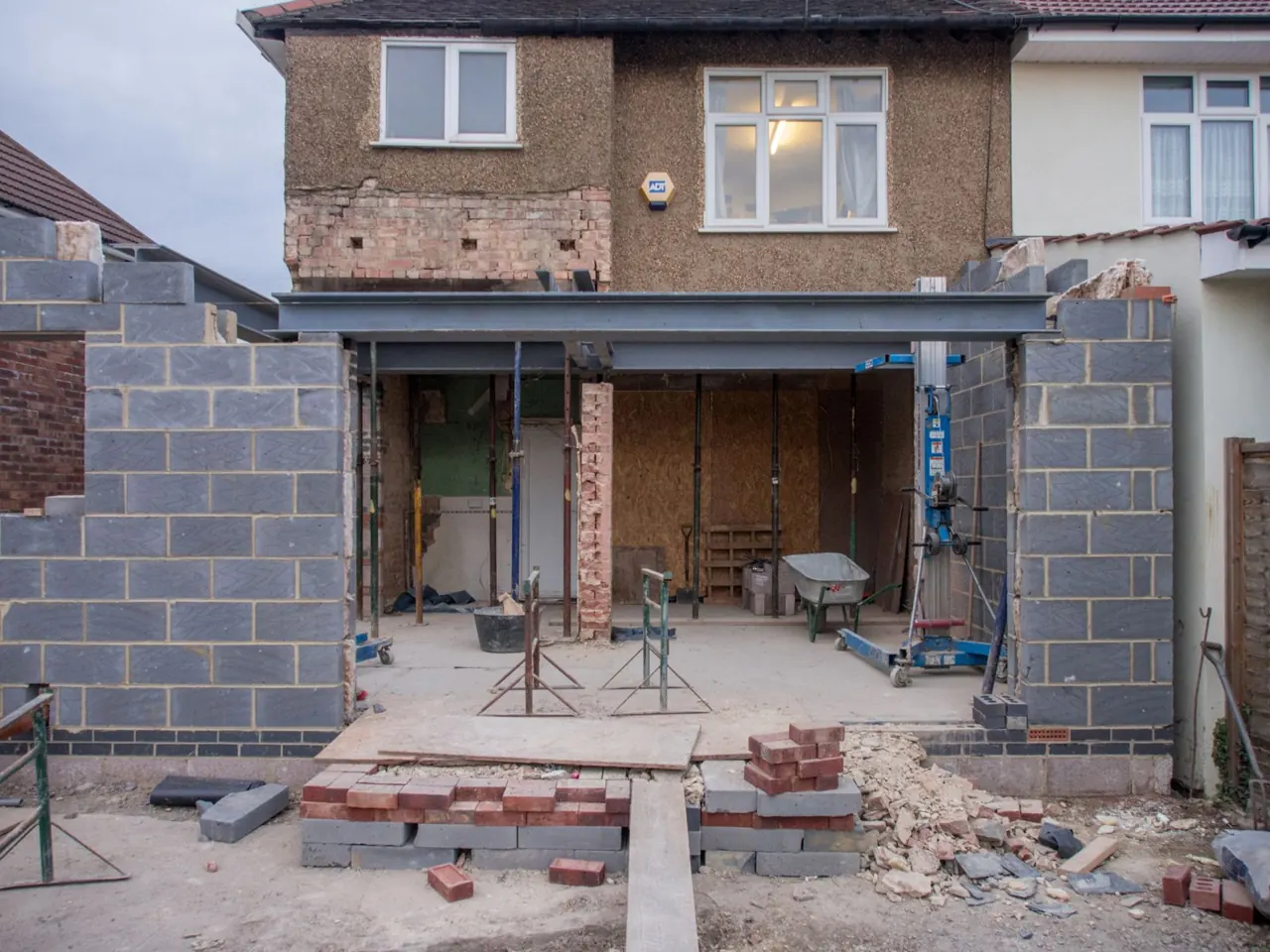
Dumpster rental for home addition work should follow the build sequence, not just the size of the new room. Tell DW Companies which parts of the existing home are coming out, what new work is planned, and where the truck can reach. You can ask for a quote without choosing a container first. For Oak Forest projects, the useful starting point is the debris, the address and the phase that produces it.
Heavy concrete and dirt require DW's designated 16-yard container. Asphalt roofing material and shingles are excluded; describe a roof connection or tear-off before including that waste in the plan. The provider's published rental guidance also says 40-yard containers generally are not delivered to residential sites. A larger addition does not automatically mean a larger residential container is available.
Request a quote for your addition
Find the answer you need
Start with what changes in the existing house
An addition can produce several different loads. Opening a wall may create drywall, timber and old finishes. Foundation work introduces a separate heavy-material question. Later, framing and fit-out can produce offcuts and packaging while the house remains occupied. Ask for construction dumpster rental around those stages rather than treating the entire project as one uniform pile.
For example, a rear-room addition might need access for the demolition crew first, then concrete work, then deliveries of new materials. That is a planning scenario, not a claim about a completed local job. The important question is whether a container placed conveniently for demolition will obstruct the next delivery. Discuss that transition before agreeing where it sits.
Give the quote enough detail to fit the job
Use a short project description that the provider can act on:
- Addition type: room, garage, second floor or another scope.
- Existing material being removed, including any concrete or dirt.
- Whether the family will remain in the home.
- Proposed placement and the route between the work and the container.
- Requested delivery date and the expected sequence of work.
- Person authorized to confirm changes on site.
You do not need an invented tonnage estimate to start. If the amount is uncertain, say so and describe the work. A contractor's scope or a clear material list is more useful than guessing a container size from the finished addition's floor area. Use the contractor checklist to prepare the handoff.
Keep the home usable while work moves forward
Walk the proposed arrangement with whoever manages the property. A family may still need a garage door, a safe pedestrian entrance or room for everyday vehicles. The builder may need the same space for a material delivery. Identify those conflicts as part of the quote conversation rather than waiting until the truck arrives.
Do not assume a curbside location is available because the driveway is busy. Property permission, project approvals and any applicable public-space requirements are separate checks. Nor should a rental request be taken as approval to modify the house. OFHA's plan-review guidance describes review for additions and other construction work, with requirements that vary by section. Confirm what applies to the actual property.
Compare the whole rental arrangement
Ask what the quoted price covers, when the agreed rental period begins, how removal is requested and what happens if the build sequence changes. Extra days, additional hauling or a different material stream should be discussed before they become assumptions. This page does not publish a standard rental duration or promise a replacement container on demand.
If most debris comes from an interior alteration rather than the addition itself, review remodeling dumpster rental as well. Then send the project details or contact DW directly to establish the actual offer. The goal is one coherent plan, not two rentals simply because two service descriptions fit.
Map the addition by debris-producing stage
Dumpster rental for a home addition should distinguish changes to the existing house, excavation or concrete work, construction and final clearing. The addition's future floor area is not a single waste estimate. A project that retains most of the existing structure differs from one involving a broad interior tear-out.
| Addition stage | Scope to describe | Rental question |
|---|---|---|
| Preparation | Retained items and any initial clearing | What is actually ready for disposal? |
| Existing-house changes | Named finishes or components removed | Which general or dense streams are involved? |
| Site and concrete work | Soil, concrete and attached materials | Designated equipment and loading terms |
| Construction | Declared offcuts, packaging and other streams | Capacity and access for the phase |
| Final clearing | Remaining accepted project debris | Removal timing and continued site access |
The stages organize the discussion. They do not imply a required number of containers or guarantee exchanges between them.
Plan the container around an occupied property
If occupants remain in the house, identify the entrances, vehicles and household functions that must remain usable. The rental can compete with contractor parking, materials and equipment as well as family access. A position that works for initial demolition may not work after excavation or deliveries change the approach.
Explain the preferred position and who can authorize an alternative. Use the delivery preparation guide and driveway placement page to describe actual conditions. A neighborhood name or project approval does not establish suitable truck clearance.
Compare volume only for the accepted material stream
For eligible bulky general debris, the 20-yard and 30-yard options provide a useful comparison. The larger nominal volume may help a defined load, but the actual loading and placement need review. The 40-yard unit is generally not delivered to residential sites.
Concrete and dirt use the designated 16-yard option. Keep those components visible even when the overall project is described as an addition. A general construction quote should not silently become an excavation load.
Assign decisions across owner, builder and trades
Identify who orders, who supervises loading and who requests removal. If the builder includes disposal in its contract, clarify the boundaries before the owner arranges separate equipment. If the owner orders directly, give the accepted material instructions to the crew.
For another work phase or a longer period, establish the actual additional-service process and price. A request for a schedule change is not confirmation of a truck visit. Use the contractor checklist to carry the current order into the field.
Ask for the first phase with the later site needs visible
Send the material, approximate amount, current stage, proposed position and requested dates. Mention later deliveries or access deadlines that constrain the first rental. Request a home-addition dumpster quote without using the addition's floor area as a substitute for the load description.
Technical planning for phased loads and access
Project review and rental approval are different records
The applicable property and construction requirements concern the work and its location. The rental offer concerns equipment, accepted material, placement and commercial terms. Use the Oak Forest section guide to investigate property-specific requirements and keep them separate from the operator's site review.
Separate volume from weight when reviewing the sequence. Bulky framing offcuts and dense concrete can create different limits, even when they come from the same addition. DW's 16-yard heavy-material rule is a material-specific requirement; it is not permission to combine every load or fill a container to an assumed weight. Confirm the accepted stream and loading instructions for each proposed container.
Placement also has two footprints: the space occupied by the box and the operating space required by the delivery vehicle. Gates, turns, branches, overhead wires, surface condition and parked equipment can affect the second. No universal clearance figure is supplied here because the actual vehicle and approach must be reviewed by the provider.
Finally, put phase changes in writing. Record who can authorize removal, how a changed debris stream is reported, and which access area must remain clear. A short, accurate handoff protects the addition schedule better than assuming the first delivery arrangement will work unchanged until completion.